Mental Health Awareness Week is a good reminder that the smallest rituals can carry real weight. Writing by hand is one of them. There's something about picking up a pen that feels different from everything else we do in a day – slower, more deliberate. And as it turns out, that feeling is backed by science.
Here's what the research says, and how to make the habit your own.
What are the benefits of journaling for mental health?
Research suggests journaling may support mental wellbeing by improving focus, reducing stress, strengthening memory and encouraging self-awareness.
Focus
Writing by hand requires slower, more intentional thought than typing – what researchers call deliberate cognition. A few minutes with a pen can do what ten minutes of scrolling cannot.
Stress
Psychologist James Pennebaker’s decades of research found that putting difficult feelings into words can help the brain process them more clearly. Giving your worries somewhere to go – rather than carrying them around mentally – can create a genuine sense of relief. Scientists call it emotional discharge. You might call it feeling lighter.
Memory
Writing by hand activates the parts of the brain linked to learning and retention. The act of writing becomes part of the processing – which is why a handwritten list often beats a digital one.
Self-awareness
Over time, a journal becomes a quiet record of you: your patterns, your moods, what drains you and what lifts you. Sometimes the benefit isn't finding answers – it's making space to notice the questions.
Is journaling scientifically proven to help mental health?
Yes – research has linked journaling with improved wellbeing, particularly when it becomes a regular ritual rather than a once-in-a-while habit. Studies on expressive writing suggest that putting thoughts and feelings into words may help reduce mental overwhelm and support emotional processing over time.
Research published in the Journal of Experimental Psychology found that writing about worries before a stressful task freed up cognitive resources and improved performance. Separate studies have linked reflective writing to lower cortisol – the hormone associated with stress.
Journaling isn't a replacement for professional support. But as a daily ritual with no barrier to entry – just a pen and a few minutes – the evidence is genuinely compelling.

How do I start journaling for mental health and wellbeing?
Start small, start honest, and don't overthink it. The most effective journaling habit is the one you'll actually keep.
Set aside five minutes, not fifty – consistency matters more than length
Write without editing yourself – honest thought beats beautiful prose
Keep your journal somewhere visible – out of sight really does mean out of mind
Try writing at the same time each day – habits form when they attach to existing routines
Use a prompt if a blank page feels too open – starting with a question is far easier than starting with nothing
Some days you'll write a page. Other days, just a sentence. Both count.
What should I write about when journaling for mental health?
Start with whatever feels most present. If you're not sure, these prompts are a good place to land:
- What's taking up most of my mental space today?
- What felt good today, however small?
- What do I need more of right now?
- What's something I'd like to let go of?
- What made me feel calm, connected or like myself recently?
Some days journaling helps untangle something big. Other days it's just somewhere quiet to put the noise.

What's the difference between wellness journaling and gratitude journaling?
Gratitude journaling focuses on appreciation – recording what you're thankful for, however big or small. Wellness journaling is broader: it can include emotional processing, habit tracking, goal-setting or simple daily check-ins. Neither is better than the other.
Many people do both. The most important thing is finding a rhythm that feels useful to you, rather than one you feel you should be doing.
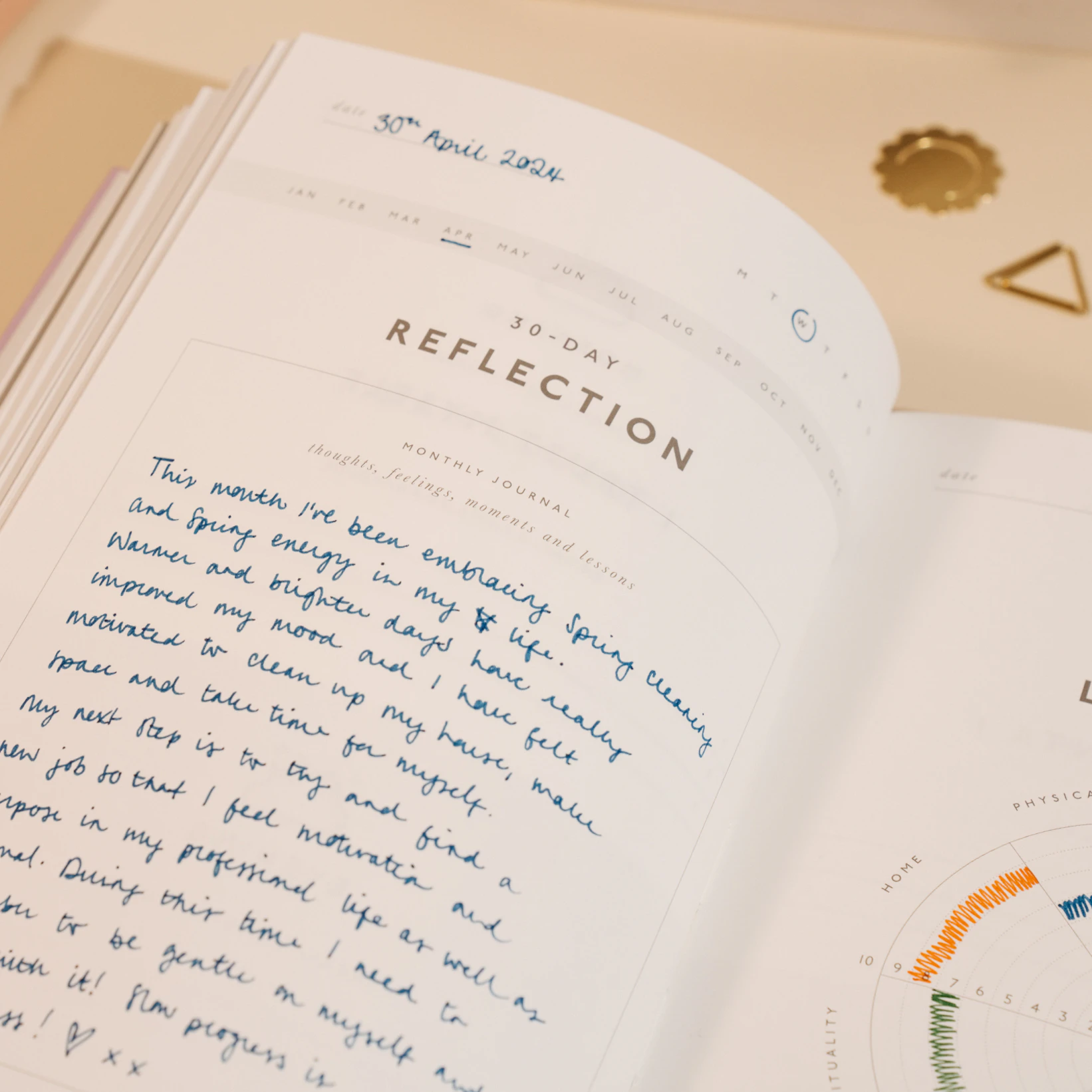
Why writing by hand still matters
In a world of constant notifications, writing by hand offers something screens can't: undivided attention. No alerts, no autocorrect, no one else in the room. That intentional slowness is part of what makes journaling so enduring – not because it needs to be poetic or profound, but because it creates space for clarity, creativity and the quiet work of understanding yourself a little better.
One page at a time.