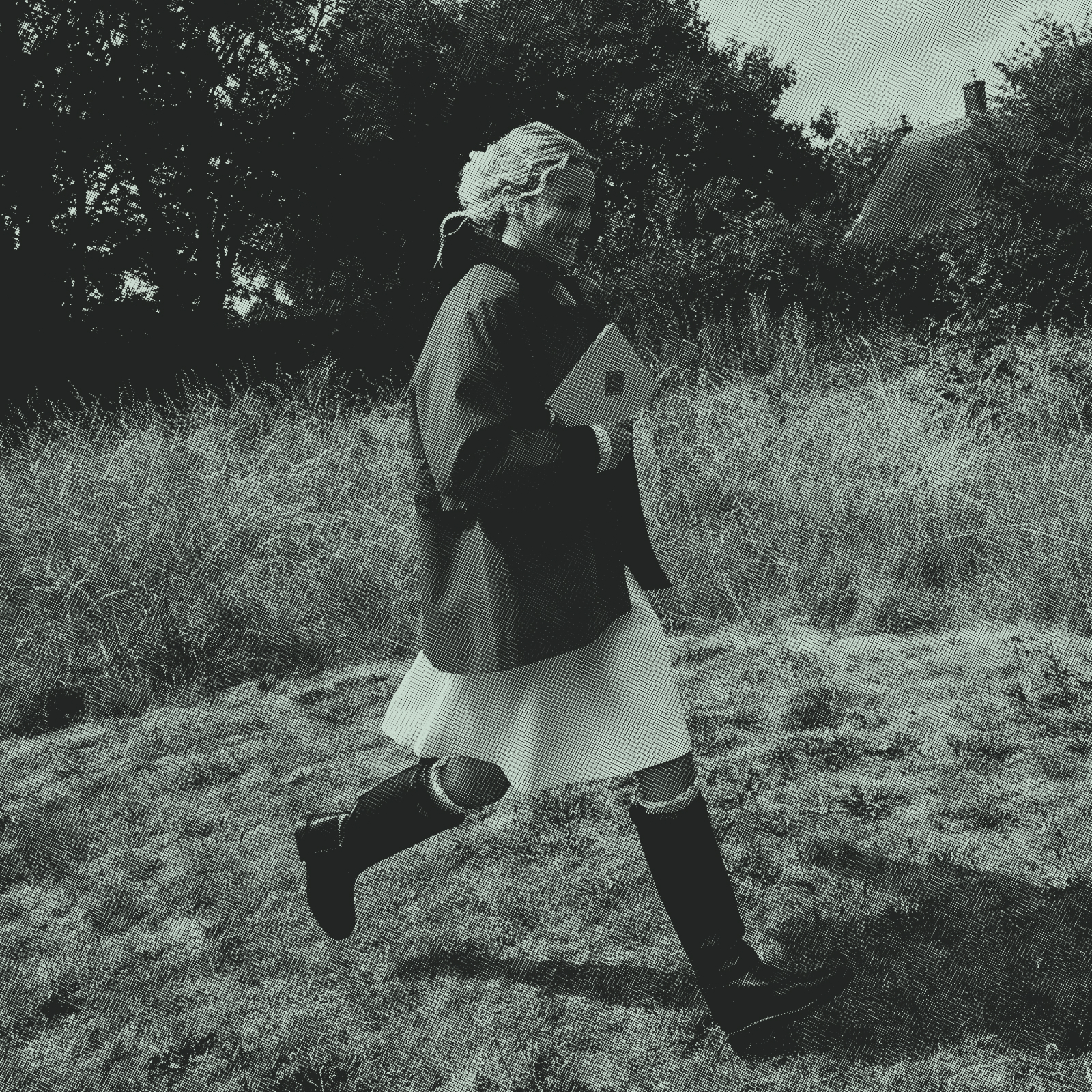
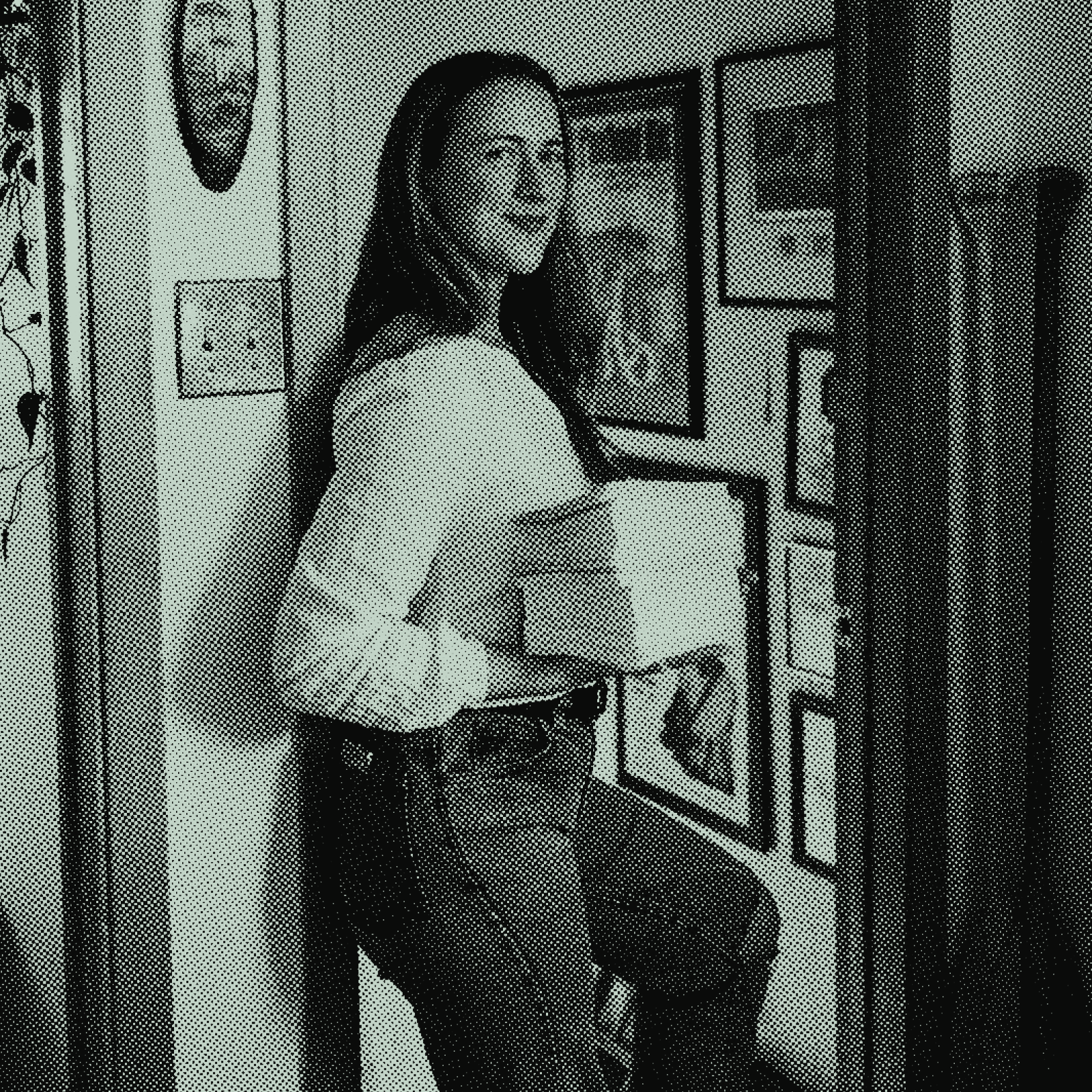
Right now, it feels like real life is having a real moment. It’s queuing outside a record store in the rain to get that new-release vinyl in your hands, or capturing a long summer on 35mm film, forgetting what you’ve taken, and then laughing at the memories. Handwritten thank you notes and IRL games nights. Experiences over endless scrolling, and gathering somewhere that isn’t the group chat. We're finding a new pleasure, and fresh perspective, in doing things the good old-fashioned way. But the real question is, why now?
There's something slightly amusing about the fact that despite endless AI, algorithms and apps, we're all suddenly choosing to make life a little less convenient, and it’s about far more than longing for the past. Scribbling letters and sending cards that take days to arrive, rather than an instant happy birthday, or I miss you, or I love you. Keeping paper planners when our phones are perfectly capable of reminding us exactly where we need to be, exactly ten minutes beforehand. What’s even funnier is that this appetite seems to be growing… online.
In modern life, it feels like an elegant rebellion to ‘go offline’, and maybe that's the allure. Connection, in theory, should be simpler than ever, with pretty much all the people you’ve ever met – and even those you haven’t – just a click, tap, call or swipe away. Yet somewhere between the endless notifications and the convenience of having everything, and everyone, in one place, we've developed a renewed affection for the things that take a little longer. Things that move at a slower pace and feel more tangible when held. It’s tempting to call it nostalgia, but we think it’s more than the past we're missing. It’s the feeling of being properly and completely present in the now.

Everything old is new again
This analog revival is showing up in all sorts of places, from coffee clubs and book nights to the contents of our everyday bags. You might have seen the analog bag trend circulating online, with people packing books, notebooks, card games and film cameras to give themselves something to reach for instead of their phones. It might sound a little elaborate to carry an entire collection of offline entertainment around with you, but there's something quite charming about the idea of being prepared for a spare half-hour without automatically spending it scrolling. While social media fads can come and go before we've even learned their names, there's evidence that our appetite for physical media has been building for a while.
According to the British Phonographic Industry, UK vinyl LP sales reached 7.6 million in 2025, marking eighteen consecutive years of growth. Pinterest's 2026 trend report also recorded a 45% rise in searches for handwritten letters and a 90% increase in searches for pen pal ideas, suggesting that the renewed interest in slower, more personal ways of communicating is extending across all kinds of hobbies.
What's most interesting is that younger generations are embracing many of these things without necessarily having grown up with them. Putting on a record becomes something you decide to do, rather than choosing a playlist, curated by an algorithm, while you do five other things. A film camera makes you truly think about the photograph you're taking, and captures that one moment in time without the option to zoom in, tweak and inevitably retake. A paperback novel doesn't offer to show you what everyone else is reading halfway through a chapter, and has space in the margins for your own notes, musings and asides.
We can appreciate the convenience of having everything at our fingertips while still enjoying the pleasure of stepping away for a while. It’s about picking which rituals have something to offer us now and, in our opinion, there are plenty.
Something to keep
Think about the last handwritten letter or card you received and, chances are, you can remember something about the handwriting, the paper or the person who sent it, perhaps even where you were when you opened it. It's a different sort of experience from reading a message on your phone, not necessarily because the words mean more, but because there's something personal about knowing somebody sat down, picked up a pen and really thought about what they wanted to tell you. No option to delete or edit after sending. Part of the appeal of handwritten things is that they've become personal through use. A notebook begins as a collection of blank pages, but over time it gathers ideas, crossed-out thoughts and little reminders of what was occupying your mind, while a planner might start the year looking beautifully organized, only to finish it with appointments moved around, birthdays underlined and hurried notes squeezed in wherever possible. It's rarely the perfectly neat pages that are the most interesting to look back on, but everything that happened between the first and the last.
There's pleasure in the process of making these things our own, too. Choosing the words for a letter, putting pen to paper without quite knowing where a thought will lead or arranging photographs into a book all ask for a little attention. One study found differences in brain connectivity when university students wrote by hand compared with typing, suggesting that the movements involved in handwriting may engage processes associated with learning. It could be that it’s simply satisfying to create something with your hands, without worrying whether there's a quicker or more efficient way to do it.

The pleasure of being unavailable
There was a time when being unreachable was perfectly ordinary, whereas now it can feel like something of a luxury. We're able to contact almost anyone at any moment, which is wonderful in many ways, but it doesn't necessarily mean we're spending more meaningful time together. There's a difference between keeping in touch and actually catching up, particularly when even the nicest evening can be interrupted by the temptation to check what's happening somewhere else.
It seems we're increasingly aware of that feeling. According to Eventbrite, the number of advertised phone-free events in the UK grew by 1,200% between 2024 and 2025, with attendance increasing by 1,441%. From reading gatherings and crafting clubs to phone-free nights out, people are finding new reasons to spend time together without the usual digital distractions. Connection in human form, rather than follow requests.
And there's research to suggest that putting our phones away really can change how we experience those moments. In one study, more than 300 people shared a meal with friends or family, with some keeping their phones on the table while others put them away. Those with phones available reported feeling more distracted and enjoying the experience less.
Of course, spending time offline doesn't have to involve booking an event, joining a class or committing to a new hobby. Sometimes it's as simple as inviting a few friends around, clearing the table and bringing out a game. The roll of the dice. The satisfaction of figuring something out. Laughing so hard you lose track of time. Play for the sake of play; a ritual and release so many of us leave in childhood.
More often than not, it’s what happens off the board that creates memories, like the conversations between turns, the running jokes and the unexpected stories shared. Whether it's chess for two, dominoes after dinner or a lively game of cards with high energy and higher stakes, play has a way of bringing people into the moment. Perhaps that why we're seeing games night back in fashion.

A little less scrolling, a little more living
For all the talk of digital detoxes, we think the nicest thing about analog living is that it doesn't have to involve a dramatic change of lifestyle. There's no need to delete every app, replace your smartphone with a fliphone or suddenly become someone who wakes up at five in the morning to be present. Modern life brings its own evolving set of pressures, so this shouldn’t be something else we reach to get ‘right’.
It's really about noticing which parts of your day might be more enjoyable with a little less screen time, and finding small ways to make that happen. For some of us, that might mean returning to a paper notebook or planner. Digital calendars are practical, but there's something joyful about opening a diary and seeing the week ahead stretched out in front of you, with birthdays, dinner dates, appointments and little things to look forward to all in one place.
You could consider a journal, which might be the most freeing of all analog habits. A place for half-formed ideas, feelings that don't quite make sense yet, or three things that made an otherwise ordinary day a good one. No audience, no need to make it profound and certainly no pressure to fill every page. Then there are the hundreds (or thousands) of photographs sitting on our phones, including plenty we love but rarely look at. Choosing a few favorites and turning them into a photo book gives those memories somewhere to live beyond the camera roll, from the spontaneous, slightly hazy pictures to the ones where nobody's looking at the camera.
There are plenty of other ways to spend a little more time offline, too. Writing a letter, picking up a pencil, reading a few pages before bed or inviting someone over for a game instead of squeezing in a FaceTime. None of these things needs to become a strict routine, and there's no particular achievement in doing them perfectly. That’s kind of the point; the reward is in the feeling. Nothing's being tracked, optimized or summarized. No one gives feedback, counts likes, comments or shares. Nobody needs to know what you did, how well you did it or whether you made the most of every minute.
You can have a lovely time, and leave it at that.